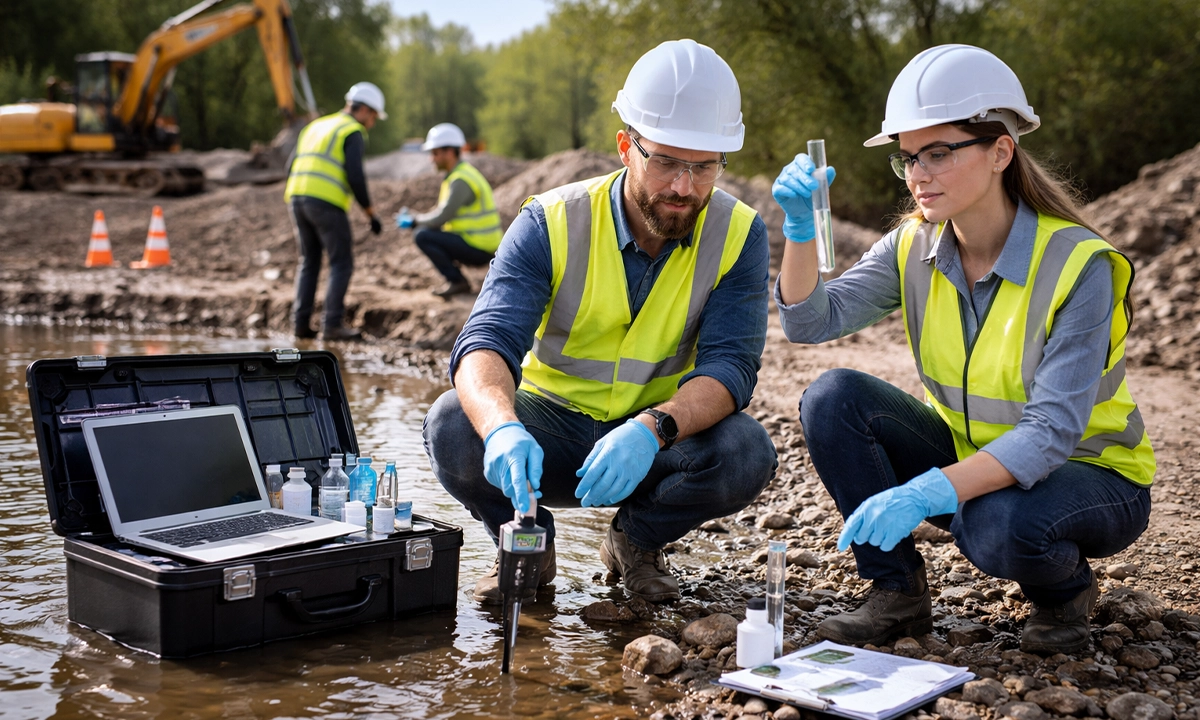
Fast, practical answers about your waste
Rapid Measurement Techniques (RMTs) are on-site and mobile testing methods that help you understand your waste quickly and decide what to do next — without unnecessary delay or cost.
They provide early, practical information to support waste acceptance, segregation, and compliance decisions, especially where waiting for laboratory results would slow operations.
Why use RMTs?
Quick on-site insight into your waste
This supports a proportionate, risk-based approach — testing what matters, when it matters.
What RMTs are used for
- Waste acceptance screening
Do RMTs replace lab tests?
No. RMTs support decision-making but do not replace laboratory testing where this is required for compliance or final waste classification.
They are used as part of a tiered approach to ensure laboratory testing is targeted, justified, and proportionate.
Who is responsible for classification?
The waste producer remains responsible for the final classification of waste. Our role is to support that process with on-site screening, experience, and practical advice, helping clients take a defensible approach to compliance.
Why clients use us
- Over 40 years’ industry experience
- Practical, site-based knowledge
- Clear, plain-English advice
- Focus on compliance without over-testing
Next steps
Not sure if you need lab tests?
Get in touch and we’ll help you decide the right level of testing for your waste — quickly and confidently.
- Early identification of potential risks
- Helps decide whether laboratory testing is actually needed
- Reduces delays, rejected loads, and unnecessary testing costs
- Load checks and segregation
- Early identification of compliance risks
- Operational decisions at waste sites
- Triggering laboratory testing only where required
Rapid Measurement Techniques (RMTs) vs Laboratory Testing
| Aspect | Rapid Measurement Techniques (RMTs) | Laboratory Testing |
| Purpose | On-site screening and rapid decision-making | Formal analysis for compliance and classification |
| Speed | Immediate or same-day results | Typically days to weeks turnaround |
| Location | On-site or mobile laboratory | Off-site accredited laboratory |
| Use in Compliance | Supports risk-based decisions and screening | Required where permits or regulations specify |
| Waste Acceptance | Initial screening before acceptance | Confirmation testing where required |
| Cost | Lower cost, targeted use | Higher cost per sample |
| Flexibility | High – can be applied quickly on site | Lower – fixed methods and schedules |
| Regulatory Role | Supports and informs compliance | Provides definitive analytical results |
| Replacement for Lab Tests? | No – used to decide if lab testing is needed | Yes – where formal results are required |
| Best Used When | Rapid decisions are needed and risk is low to moderate | Final confirmation or high-risk decisions are required |